
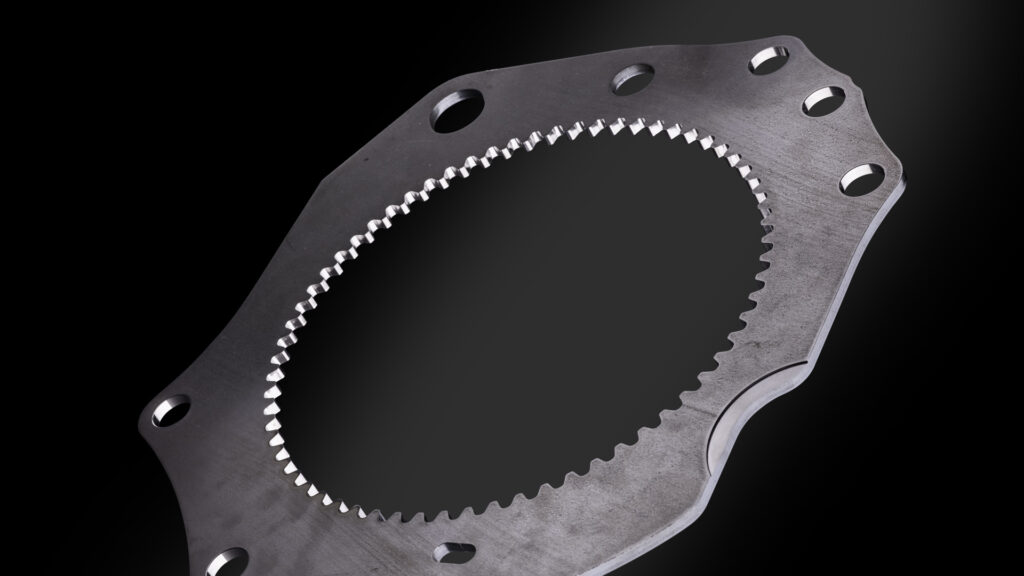
What is fusion cutting?
In fusion cutting, the laser melts the material along the cutting path and an inert cutting gas, usually nitrogen, blows the molten material out of the cut. Unlike oxygen cutting, there is no active combustion to add extra heat. This results in a controlled process and often a cleaner cut surface, especially on materials where oxide is not desirable.
In short: the laser melts, the gas cleans the cut, and you get an edge that is well suited for further processing.
When is fusion cutting most suitable?
Fusion cutting is a good choice when you need to:
- High cutting speed and consistent quality in production
- Clean cut surface where oxide should be avoided
- Parts to be further welded, assembled or finished
- Good repeatability in series
- Complex geometry with fine edge quality requirements
The method is often used for stainless steel and aluminum, but can also be relevant for other materials depending on the requirements and subsequent process.
Benefits in your production
Melt cutting not only affects the cut, but also how efficient your flow will be afterwards.
Cleaner edges for the next step
When you want a cut surface that works well for welding, bonding, assembly or surface treatment, fusion cutting is often a safe choice, as the process normally produces less oxidation than oxygen cutting.
High process stability
The right settings provide stable results over time. It makes it easier to plan batches, maintain tolerances and minimize scrap.
Less rework
Good cutting parameters and the right process selection can reduce the need for deburring and manual processing, especially for parts with many meters of cutting length or many contours.
What determines the outcome
To get the right quality in fusion cutting, the process needs to be adapted to the part.
Material and thickness
The choice of power, speed, nozzle and gas pressure determines both edge quality and productivity.
Geometry and hole patterns
Small holes, tight inner corners and tight contours may require adjustments to maintain quality and dimensions.
Tolerances and functional surfaces
If certain dimensions are critical for fitting or assembly, we will help you define functional dimensions and, if necessary, plan for additional machining.
From base to finished detail
For faster quotes and a result that matches your application, it is good if you send:
- DXF or DWG for cutting contours
- Material, thickness and required quantity
- Drawing or specification with tolerances and functional dimensions
- Any requirements for grading, marking or post-processing
If you are unsure which cutting method is best for your part, we will help you choose the process based on the material, cut area requirements and how the part will be used.
Contact us for a quote or technical advice
Do you want an efficient laser cutting process with a clean cut surface and stable quality in series? Contact Thor Ahlgren AB and we will go through your detail, your requirements and develop an arrangement that suits your production.
Request a quote or ask a question and we will help you further.